

Protecting Your Vision From Diabetes
Optical coherence tomography (OCT) gives your doctor a detailed cross-section of the retina. We repeat the same scans at every visit, at any of our offices, so subtle changes stand out early.
Diabetes rarely affects the retina alone. When cataracts, glaucoma, or cornea problems complicate treatment planning, our retina doctors work with the practice's other subspecialists, keeping your care in one practice.
Diabetic eye exams and testing are medically necessary care, and most plans cover them. We accept most insurances and most major credit cards, and we explain what your plan covers before testing begins.
“Having type one diabetes, they annually check for any dysfunction as I age with this disease. The whole staff, from the front office to the NPs and technicians, are excellent and knowledgeable. Highly recommend. – Shayne, 5-Star Review
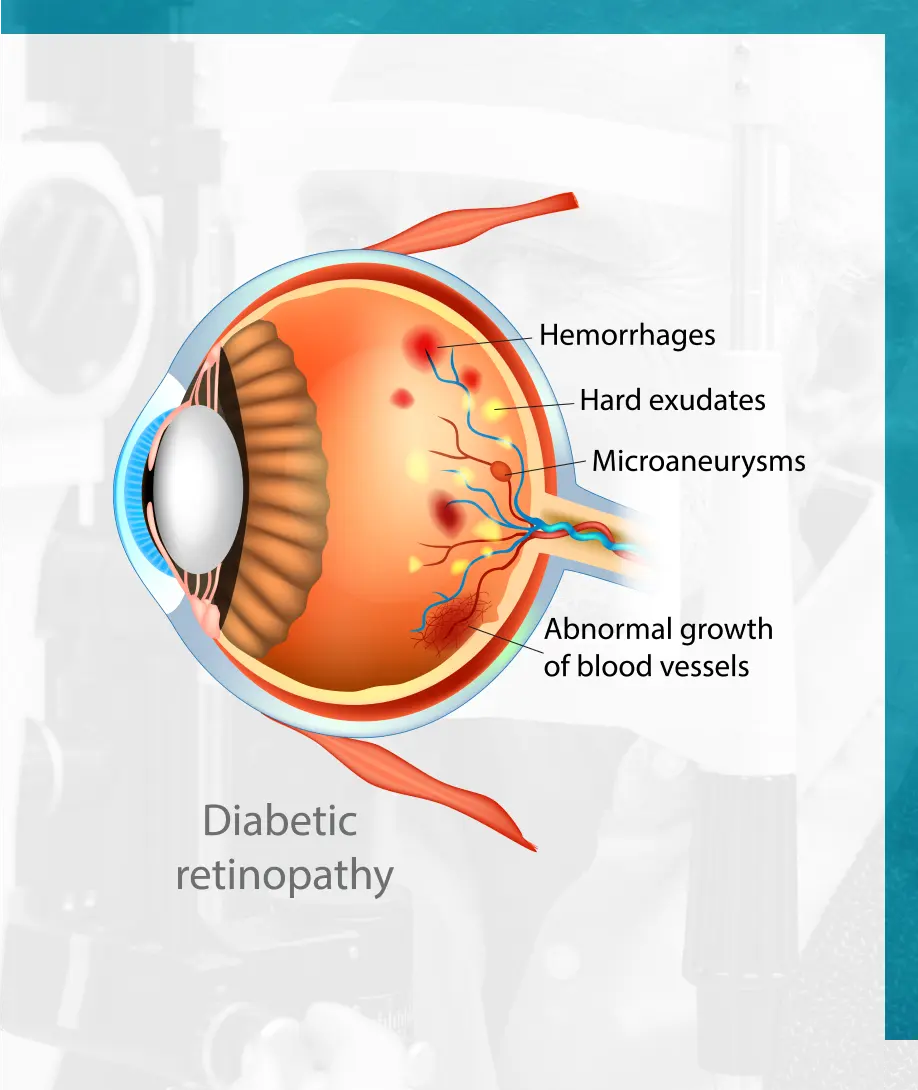
Diabetic retinopathy is an eye disease caused by high blood sugar. Over time, elevated glucose damages the small blood vessels that feed the retina, the light-sensing tissue at the back of the eye. Damaged vessels can swell, leak, or close off, and any of these changes can harm vision. Every type of diabetes, including gestational diabetes, carries this risk.
In nonproliferative diabetic retinopathy (NPDR), weakened vessels bulge and leak fluid into the retina. Many patients notice nothing at this stage. NPDR can also lead to diabetic macular edema (DME), swelling in the central retina that blurs the sharp vision you use for reading and driving.
In proliferative diabetic retinopathy (PDR), blocked vessels trigger the growth of abnormal new ones. These fragile vessels bleed into the vitreous and form scar tissue, which can pull on the retina and cause serious complications.
Symptoms of diabetic retinopathy are often absent at first. There is usually no pain and no obvious vision change in the early stages. When symptoms do appear, they can include new eye floaters (dark spots or streaks that drift across your vision), blurred or fluctuating vision, and trouble reading or seeing faraway objects. Because the damage can begin silently, a yearly dilated exam with an ophthalmologist in Monterey, CA is the most reliable way to catch the disease while treatment can still protect your sight. If you have diabetes and notice any new vision change, call us the same day.
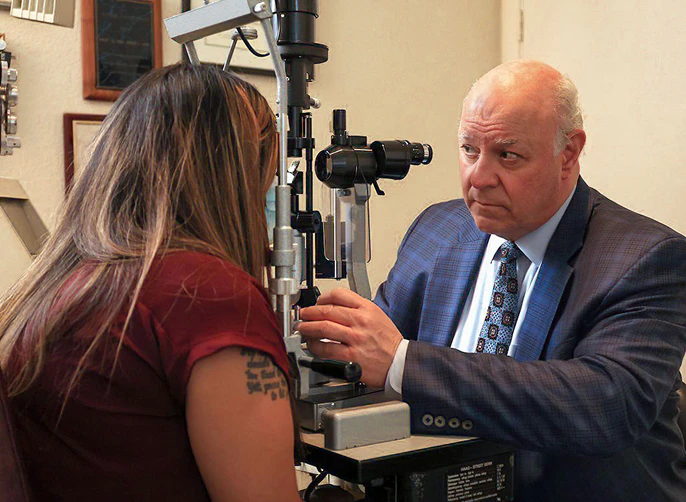
A diabetic eye exam is a medical visit, and dilation is part of every screening. Drops widen your pupils so your doctor can examine the retina and take OCT images. Your eyes may stay blurry and light-sensitive for a few hours afterward, so arrange a driver if you can.
Bring these items to your visit:
After each visit, keep your diabetes care team informed of the findings. Steady blood sugar control, regular follow-ups, and yearly screenings work together to protect your vision.
Diabetic retinopathy treatment depends on the stage of the disease and whether the macula is involved. Many patients with early retinopathy need careful monitoring rather than procedures.
Regular dilated exams and OCT imaging track the retina between visits. If the disease stays stable, monitoring plus tight blood sugar control may be all that is needed.
Laser photocoagulation seals leaking blood vessels and discourages abnormal new growth. It is an established treatment for advanced disease and some cases of diabetic macular edema, and it is available in our practice.
If advanced disease or DME calls for injections, these are given in our office using numbing drops. When vitrectomy surgery is needed, your retina specialist will arrange it at a local outpatient surgery center, and review the anesthesia method with you beforehand.
“Very courteous and efficiently operated eye clinic. My exam was thorough and details were explained to me. Would highly recommend.”
– Drew, 5-Star Review
Treatment usually cannot undo damage that has already happened, but it can stop your vision from getting worse. Better blood sugar control helps, too. The earlier retinopathy is found, the more sight can be preserved, which is why yearly dilated exams matter so much.
Often there is none. Most patients feel and see nothing in the early stage. When signs do appear, they can include floaters, blurry vision, or dark spots. A dilated exam can detect retinopathy before you notice anything.
At least once a year for most people with diabetes, even when vision seems fine. If you already have retinopathy, or you are pregnant, your doctor may recommend more frequent exams. Our Monterey, Salinas, and King City offices all provide diabetic eye exams.
Untreated diabetic retinopathy can. But blindness is not inevitable. Yearly screening, timely treatment, and good diabetes management greatly reduce the risk of severe vision loss.
Locations
We have 4 locations the greater Monterey area
“Welcoming space, friendly staff. Doctors are very knowledgeable. I went in to update my prescription and they recommended other things to help with my near sightedness. They also promote eye care.”
–Michael, 5-Star Review