If you’ve just been diagnosed with glaucoma, you’re probably wondering what happens next. Maybe you’ve already searched online and read about some worst-case scenarios. Maybe you’re worried you’ll lose your vision. It's time to get grounded in the facts.
The first thing I want you to understand is that most people who are diagnosed early, follow their treatment plan, and keep their appointments maintain useful vision throughout their lives. Like high blood pressure, diabetes, or any other chronic condition, glaucoma is something we manage over time rather than cure outright. That may sound intimidating at first, but know this: Your diagnosis is not a verdict, and it is absolutely possible to keep it in check and preserve your quality of vision.
Your First Steps
After an initial diagnosis, we need to understand exactly what we're dealing with. Every case of glaucoma is a little different, and your treatment plan should reflect your specific situation.
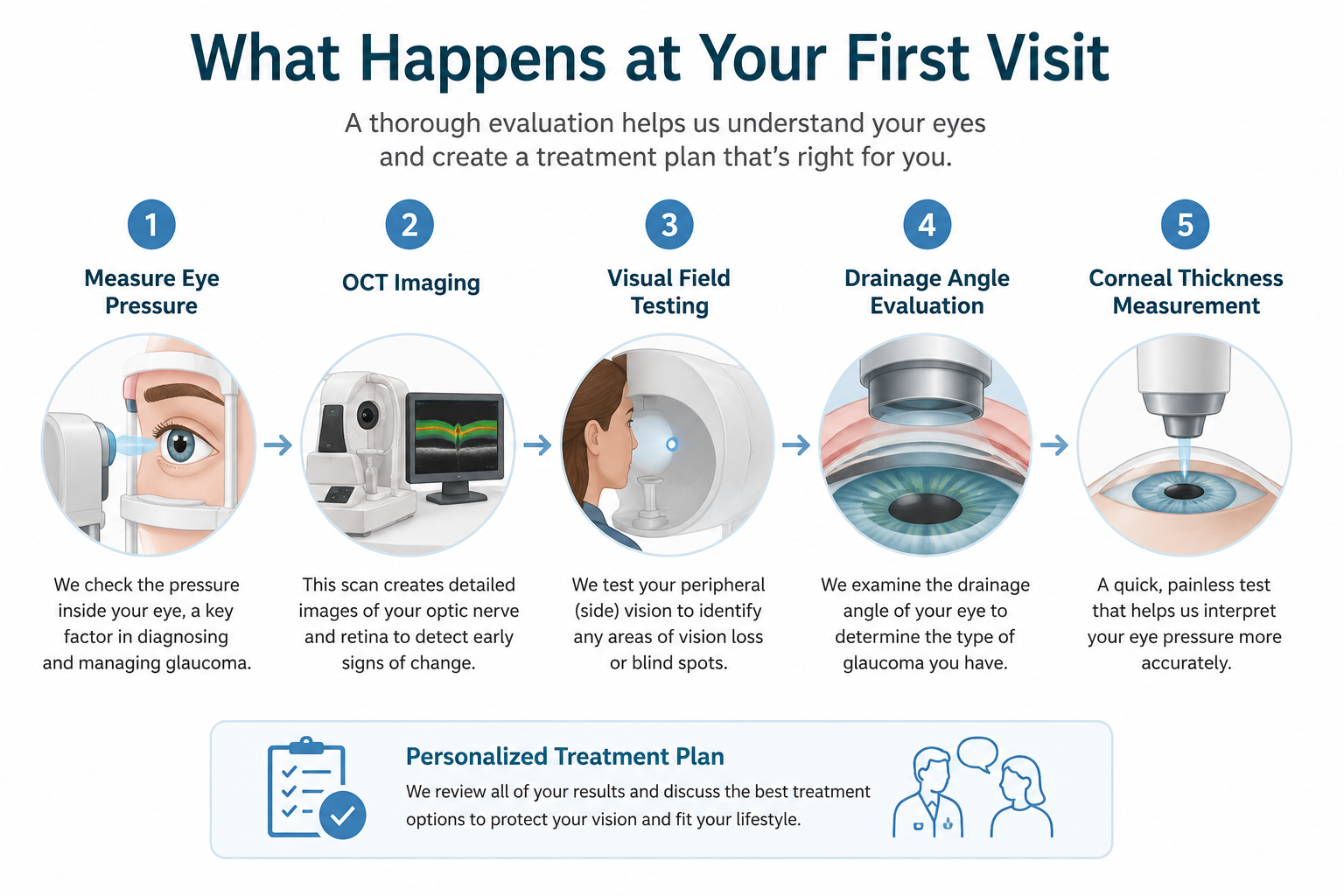
Before we decide on treatment, I want to understand exactly how glaucoma is affecting your eyes. That means measuring your eye pressure, evaluating your optic nerve, checking your peripheral vision, and looking at how well your eye’s drainage system is working. Most patients are pleasantly surprised that these tests are quick, painless, and far less intimidating than they expected.
Depending on your needs, your evaluation may include:
Together, those tests help us understand not just whether glaucoma is present, but how aggressively we need to treat it.
Treatment Options
This is where I often see relief on patients' faces. The treatment landscape for glaucoma has improved significantly, and we have more tools than ever to protect your vision.
For many patients, we start with medicated eye drops that lower intraocular pressure. They're effective, and for a lot of people, that's all that's needed. But I'm also honest with my patients: drops require discipline. You have to use them every day, exactly as prescribed. Skipping doses lets pressure creep back up, and that's when damage can happen. If the drops bother you, tell me. We have alternatives, and sometimes the best treatment plan is simply the one you’ll actually be able to stick with.
For example, selective laser trabeculoplasty (SLT) is a quick, in-office procedure that improves your eye's natural drainage capacity. Minimally invasive glaucoma surgery (MIGS) is another option I recommend frequently. These procedures use tiny stents or instruments to restore fluid flow with minimal downtime. While both of these options are more invasive than using drops, they take the routine out of the equation and can simplify glaucoma management.
The right treatment depends on the type of glaucoma you have, how advanced it is, and how well a particular option fits your lifestyle.
the Big Takeaway
If you remember only one thing from this article, remember this: keep your follow-up appointments.
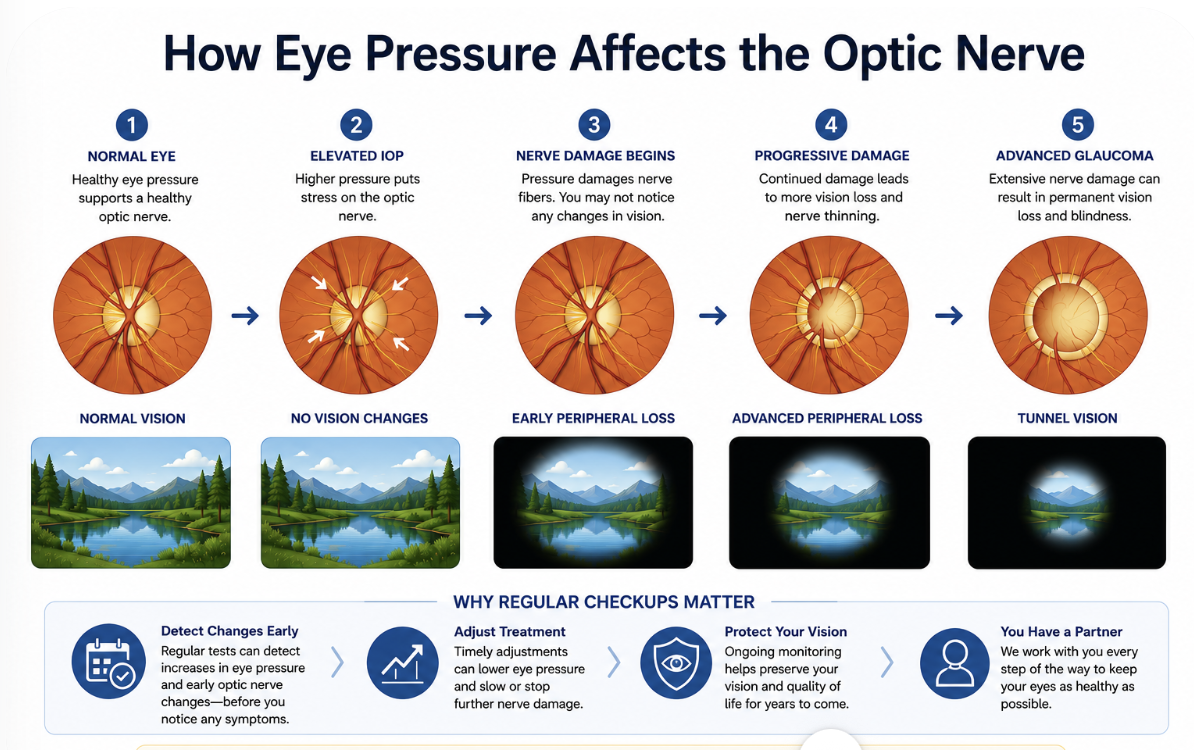
Glaucoma usually progresses silently. You won’t necessarily notice changes in your vision as they’re happening, which is why regular pressure checks, imaging, and visual field testing matter so much. Those visits tell us whether your treatment is working or whether we need to make adjustments before additional vision is lost.
Other Things You Can Do
Once you and your ophthalmologist have gathered a clear picture of the state of your ocular health and established a routine of check-ins, meds, and any other immediate measures, there are a few simple things you can do every day to help safeguard your vision:
You're Not Alone
One thing I always tell my patients is that a glaucoma diagnosis is the beginning of a relationship, not a one-time event. You'll be seeing your ophthalmologist regularly, and they should be able to answer every question, whether it's your first visit or your fiftieth.
One of the most rewarding parts of my job is seeing patients return year after year with stable vision. That’s our goal. Not simply treating glaucoma once, but protecting your eyesight over the long term. If you’ve recently been diagnosed, or if you’ve been told you may be at risk, don’t let fear keep you from taking the next step. The earlier we begin monitoring and treatment, the more vision we can preserve for the future.
We're happy to walk you through it. Schedule a glaucoma evaluation at one of our Monterey County offices.
Locations
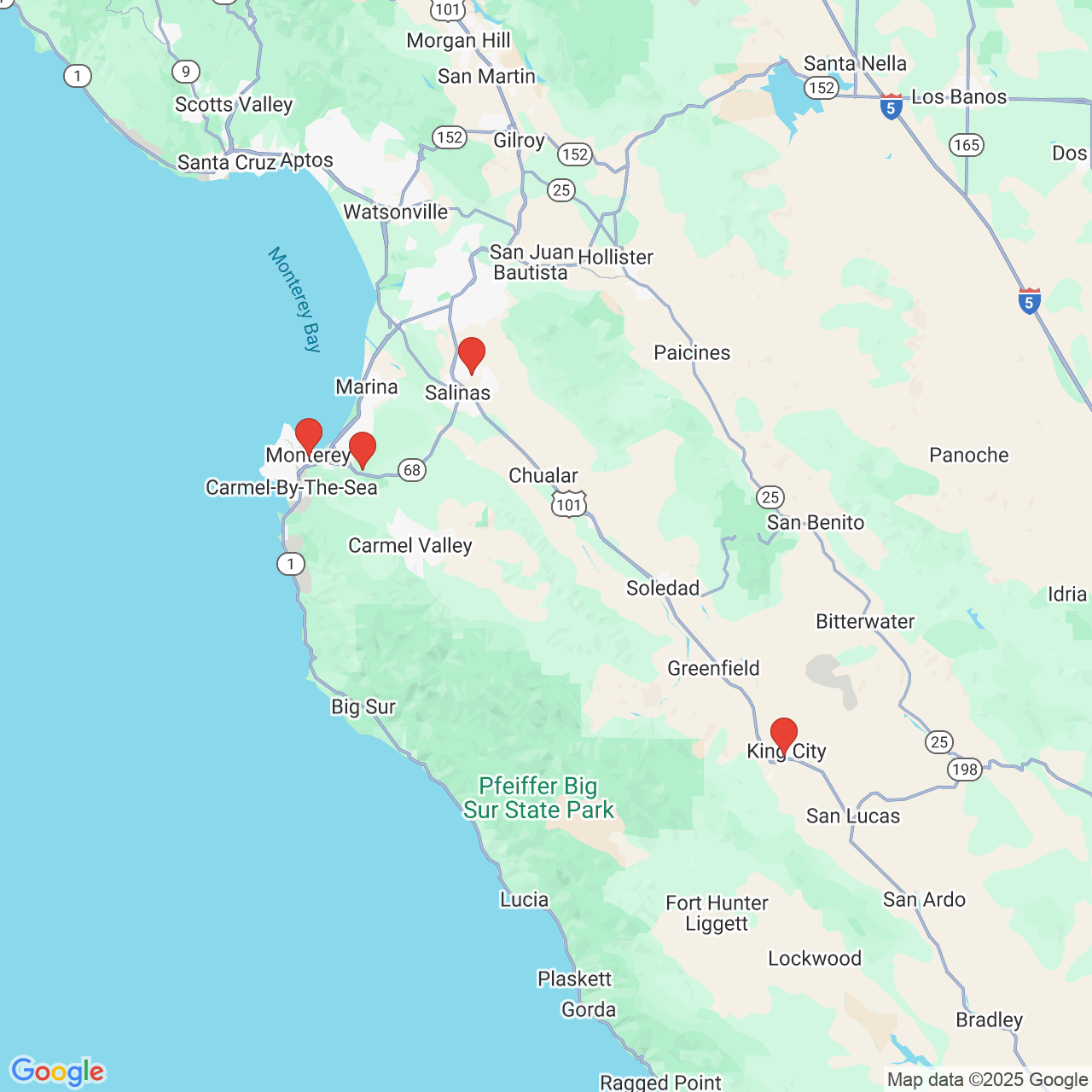
We have 4 locations the greater Monterey area
“Welcoming space, friendly staff. Doctors are very knowledgeable. I went in to update my prescription and they recommended other things to help with my near sightedness. They also promote eye care.”
–Michael, 5-Star Review